Wanderlust
Emigrating to Canada 1968 – Into the Adventure with 1,200 Francs
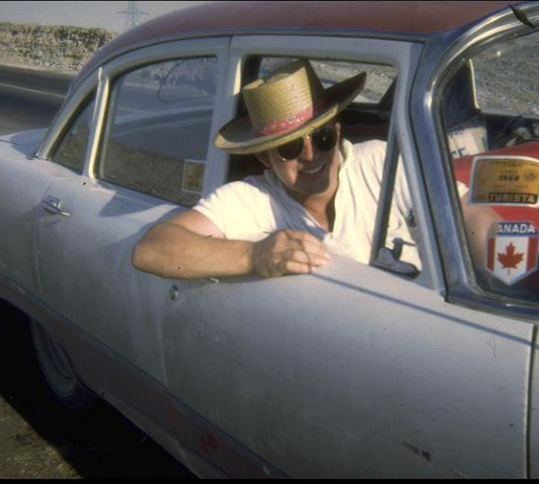
On 1 April 1968, two young Swiss bricklayers took a bold leap into the unknown: with 1,200 francs each in their pockets and big dreams in their luggage, they set off on their Canada adventure. What began as a boastful promise to emigrate became a story of perseverance, unexpected human kindness, and the struggle for survival in the new world. Hans Bieri recounts this moving chapter of his life in his autobiography «Ruf vom Himmel» (Call from Heaven).
A Farewell in Tears
The sun cast generous warmth over the slowly greening meadows on that 1 April 1968. Yet no one was laughing on that farewell day — all the more tears flowed from the mothers.
With packed suitcases and 1,200 francs each, the two young men took the train to Kloten. Soon after, they were seated in a Canadian DC8 at 32,000 feet, bound for Montreal. The uncertainty was immense: who knew whether they would ever see each other again?
No Job – The Harsh Reality in Montreal and Toronto
Montreal greeted them with the allure of a world city, but also with almost unbearable car exhaust fumes. Staying in a cheap lodging, they had to budget their money carefully — there was not much of it.
Disillusionment came swiftly: their bricklayer training was not recognised. At the employment office the answer was simply "No Job, no work." Canadian French proved to be its own challenge. His colleague Hans Hirt, who spoke fluent French, could make little sense of the Canadian French patois.
Toronto brought no change either. They continued westward on the Canadian Pacific Railway through a landscape frozen rock-solid in winter. Hope faded with every kilometre.
How Do You Survive on the Last 80 Dollars?
Arriving in Winnipeg, the situation was critical: only 80 dollars each. The plan was desperate but clear — if no work could be found, they would buy a hunting rifle and live in a self-built cabin in the north, just as people had done a hundred years before. For one thing was certain to both of them: they, the emigrants, would never return to Switzerland. That would be a disgrace they could not bear. They could already hear the voices from home, laughing at them — at the two young men who had set off with such grand ambitions and come back small. They would rather be lost in the solitude of the forests than endure that mockery.
Fate had other plans. Half an hour before Winnipeg they found a newspaper on the floor of the train. They had almost given up when they spotted the lifesaving advertisement: "We are looking for labourers for our plastering business on a construction site."
The Breakthrough with the Three Polish Grandmothers
Mr. Wagner, the German employer, took them on. The work was hard — carrying plaster up to the sixth floor all day long. But they were used to hard work and had the strength of bulls. The good wages more than compensated: at an exchange rate of 4.00, they earned double or more than Swiss bricklayers back home.
At 563 Victor St. they found lodging with three elderly sisters from Poland who had fled to Canada during the war. These warm-hearted old ladies looked after the two young Swiss men with touching care: "Boys, you have to go to Church," they reminded them every week.
They also worked alongside Indigenous men — good colleagues, yet every weekend they would disappear for days until they had drunk away their wages. The encounter with the sad reality of the indigenous people, who burned their government-built wooden houses board by board for firewood, left a lasting impression. The proud Indigenous people had given up on themselves — that shook Hans Bieri deeply.